


Most crypto losses don’t come from clever zero-days—they come from everyday habits. You don’t need to be paranoid, just disciplined. The five rules below are simple, high-impact, and easy to implement whether you’re trading daily or holding for the long run.
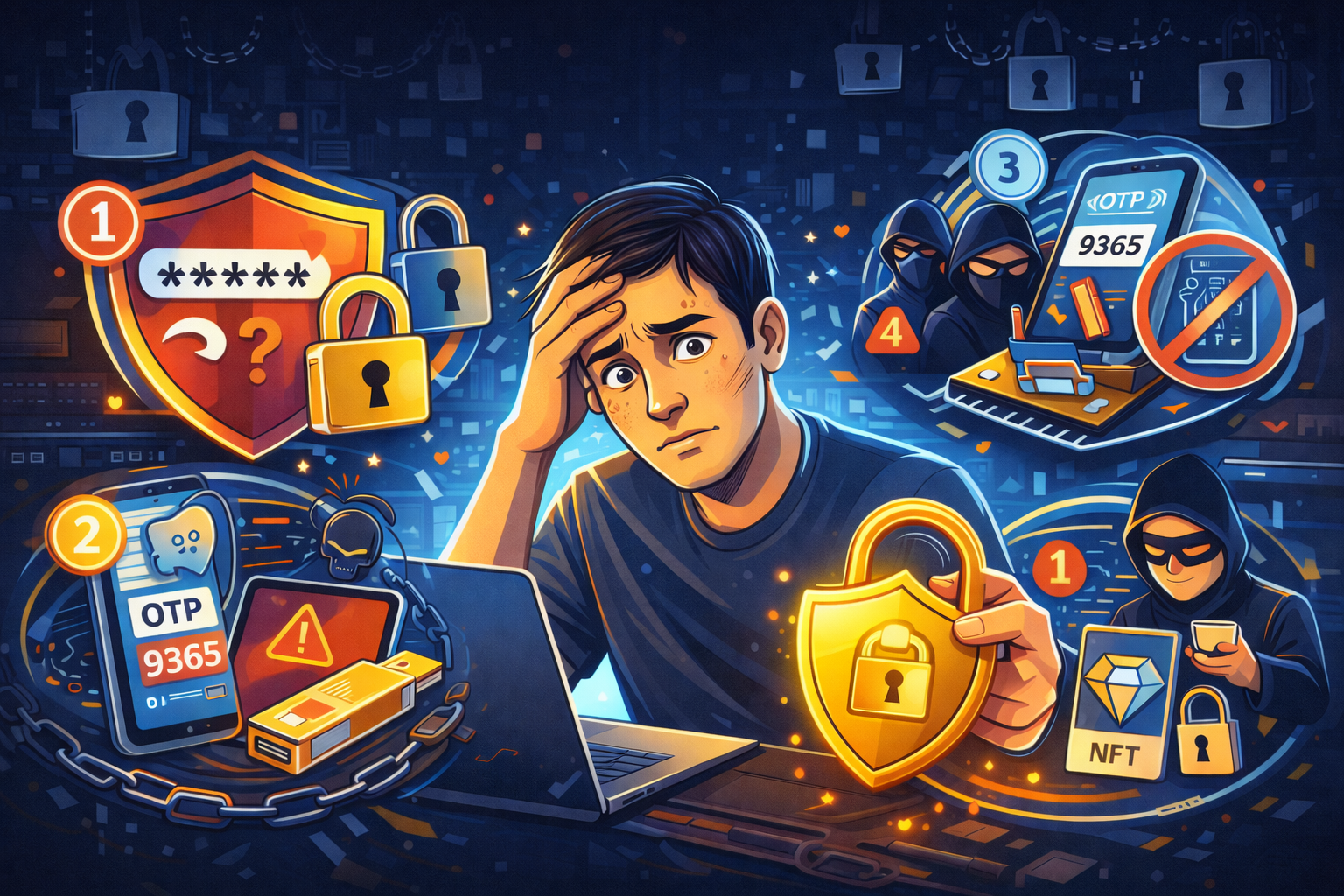
A seed phrase written once and stuffed in a drawer isn’t a strategy. Make two clean, legible copies stored in separate secure locations; avoid cloud photos and shared drives. Then do a dry-run restore on a spare device with zero funds so the process isn’t new during an emergency. If you use MPC or social recovery, document who holds which shard, how to rotate guardians, and what happens if one disappears. Hardware wallets remain the simplest vault for high-value holdings.
Most losses start with a signature, not a hack. Read what you’re approving; prefer human-readable prompts (EIP-712) and watch for unlimited ERC-20 allowances. Good practice: set finite approvals and regularly revoke old ones using your wallet’s approval manager or a trusted explorer tool. Transaction simulation is your friend—if the preview shows assets leaving you didn’t intend to move, step away. Modern multi-chain wallets (e.g., React Wallet) surface simulation and approval scope so you can catch red flags before they settle on-chain.
Copy-paste invites typos and malware that swaps clipboard text. Use an address book with saved, verified recipients; scan QR codes when possible; and send a low-value test on first contact. Naming helps: ENS or saved aliases beat “0x…b3f.” If you bridge or interact across chains, confirm the chain ID at the moment of send—look-alike networks and spoofed RPCs are real attack routes.
Keep OS and browser up to date, limit extensions, and separate work and crypto into a dedicated browser profile. If you’re connecting to many dApps, use a burner account with small balances; keep your vault account isolated and never sign dApp approvals from it. Biometrics or a strong passcode add another layer if your phone is lost. For sizable transfers, confirm on a hardware wallet screen—trust the device, not the webpage.
Scam tokens often mimic tickers and logos. Always fetch the contract address from official sources, then cross-check on a reputable explorer. On swaps, preview minimum received, slippage, and fee routing; if the route looks odd (illiquid pools, brand-new tokens), cancel. Gas-aware tooling and advanced price alerts—available in many modern wallets, including React Wallet—help you spot outliers before you commit.
Quick routine: “Simulate → Check approvals → Confirm chain → Verify recipient alias → Send a test.” It takes 30 seconds and prevents most mistakes.
When to move funds to cold storage: if a balance’s loss would change your month, it doesn’t belong in a hot wallet. Move it to hardware or to an account-abstraction policy with stricter limits where supported. Let your hot wallet handle life on-chain; let your vault help you sleep.


%201.png)


