


If you’re new to digital assets, “where do I keep my crypto?” sounds like a storage problem. It’s really a key-custody decision. Your coins stay on the blockchain; what you’re choosing is who controls the keys and how you access them day to day.
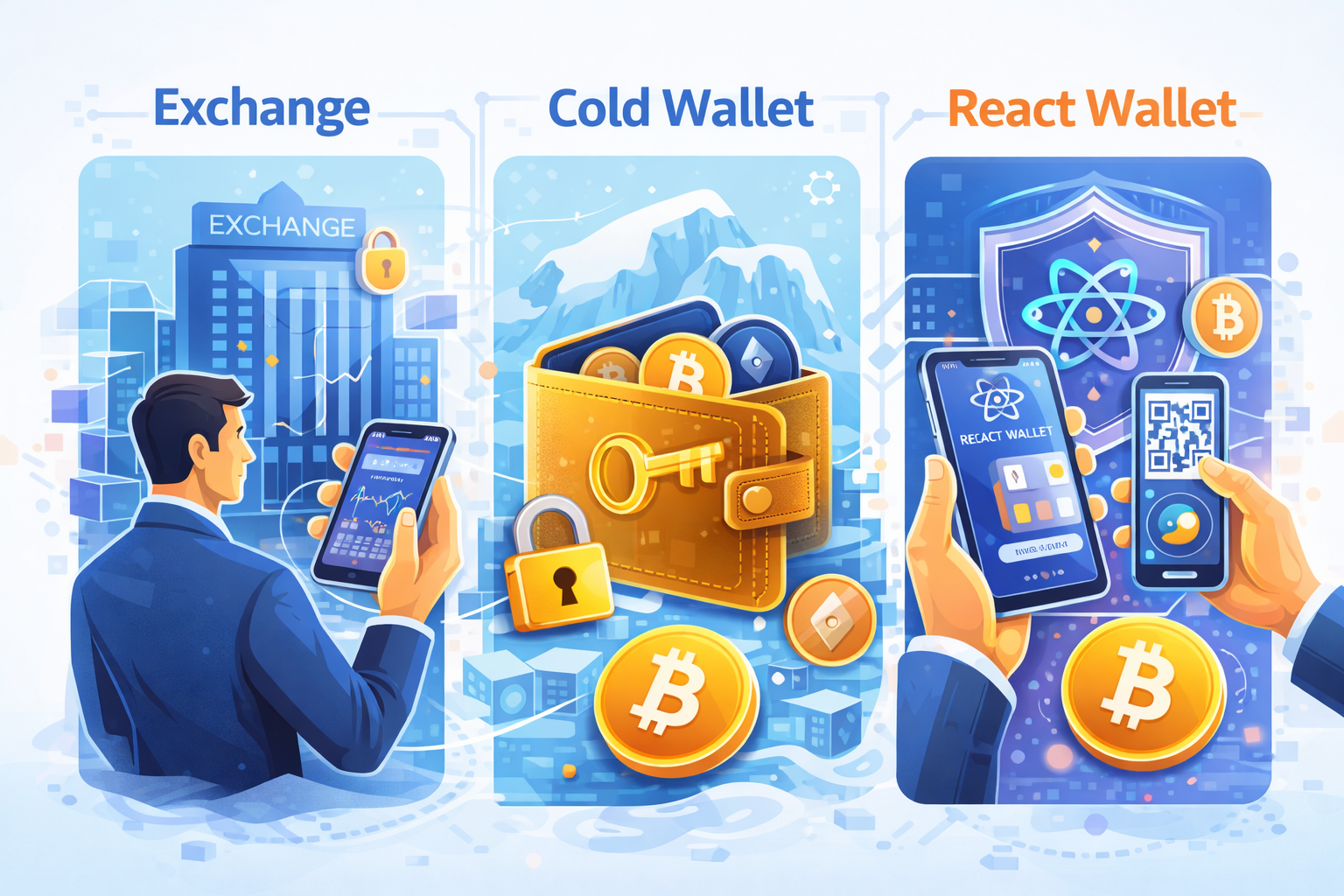
Centralized exchanges are convenient: instant price discovery, deep liquidity, and straightforward fiat on/off-ramps. For active traders or people moving between assets frequently, that’s hard to beat. But exchanges are custodial by design—your funds are pooled and the platform signs on your behalf. Operational pauses, withdrawal queues, jurisdictional rules, and account freezes are part of that model. For long-term holding, many users treat exchanges as a bridge, not a final destination.
Watch out: support chats that ask for seed phrases or remote-desktop access are always scams. Legitimate platforms never need your private keys.
Hardware wallets (and other offline methods) move your keys off the internet entirely. That isolation is powerful: malware, fake browser extensions, and dodgy Wi-Fi have a harder time reaching you. The trade-off is friction. Swaps require extra steps, and losing a recovery phrase can be catastrophic. Cold storage shines when you hold meaningful value and transact rarely—think “vault,” not “checking account.”
Pro tip: write the recovery phrase clearly, store it in two separate secure places, and practice a small restore once so the process isn’t new during an emergency.
A modern non-custodial app keeps your keys on your device and asks you to approve every action. That preserves ownership while giving you speed for daily tasks: sending, receiving, connecting to dApps, or checking portfolio health. Mature apps add guardrails—transaction simulation, human-readable signing, address books, clear chain IDs, and price alerts—so you’re less likely to approve something you didn’t intend.
React Wallet is one example of this approach: a multi-chain, non-custodial app (supporting 21+ networks) with WalletConnect v2 for dApps, gas-saving tools, and account-abstraction/EIP-7702 support where available. The aim is simple: keep custody with you while making routine actions cheaper and clearer.
Most people don’t pick one place. They use a two-tier setup: a hot wallet for everyday activity and a cold wallet for savings. Exchanges become the on-ramp/off-ramp and nothing more. Funds move from exchange to personal wallets, and from hot to cold when balances grow beyond your comfort threshold. React Wallet aims to be the Super App that mends this practical split, one feature at a time.
Custody: Platform
Best for: Trading, fiat ramps
Main risk: Account/withdrawal controls
Custody: You
Best for: Daily payments & dApps
Main risk: Device compromise/phishing
Custody: You (offline)
Best for: Long-term holding
Main risk: Backup loss / usability errors
Bottom line: treat storage as a strategy, not a product. Use the exchange to enter and exit, a non-custodial wallet for life on-chain, and cold storage to sleep well at night. As your needs change, rebalance along the spectrum—not your principles of self-custody.


%201.png)


